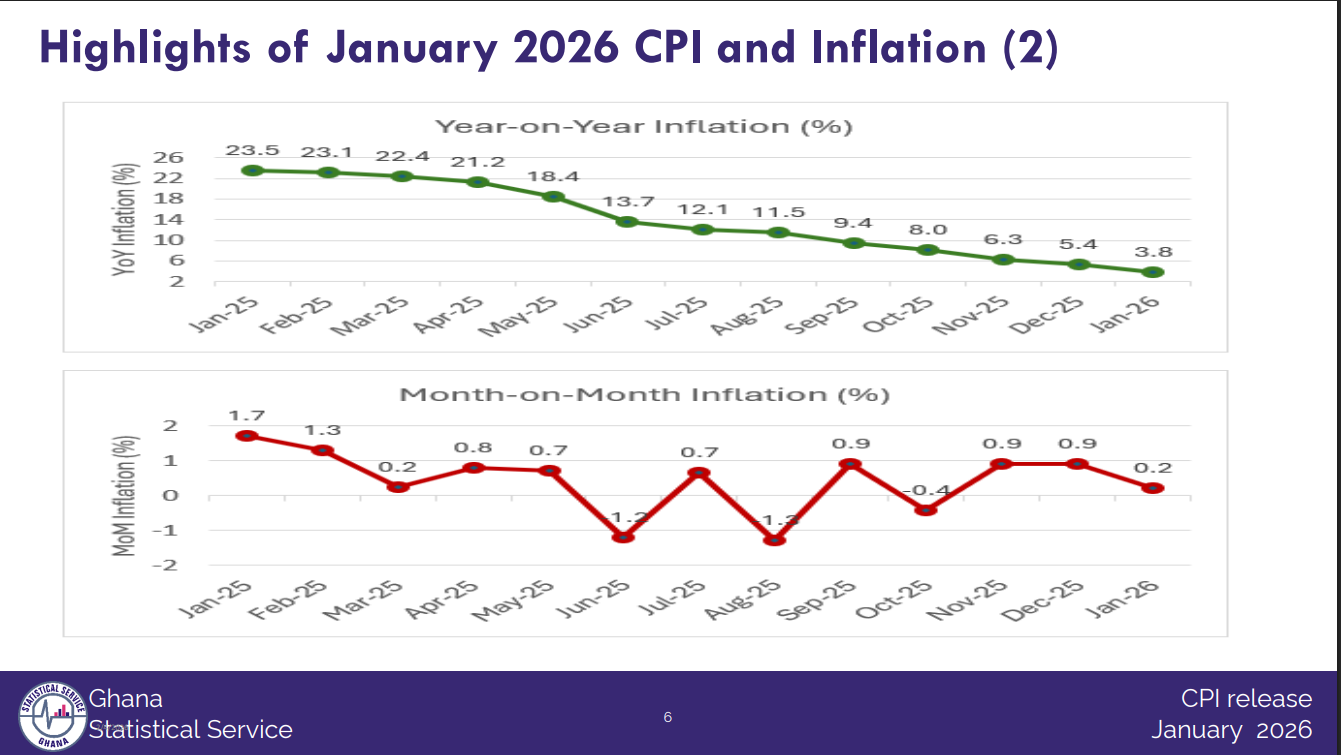
he Ghana Statistical Service (GSS) released a report that has sent mixed signals through the West African economic corridor. Ghana’s annual consumer inflation has hit a fresh multi-year low of 3.8% for January 2026, down from 5.4% in December. This marks the 13th consecutive month of disinflation, successfully bringing the rate well below the Bank of Ghana’s target ceiling of 8%.
However, the celebration in the halls of the Central Bank is being overshadowed by a high-stakes emergency at the Castle. President John Dramani Mahama has convened an emergency Cabinet session today to address a “liquidity strangulation” in the cocoa sector—the backbone of Ghana’s foreign exchange earnings.
The Disinflation Miracle vs. The Exchange Rate Reality
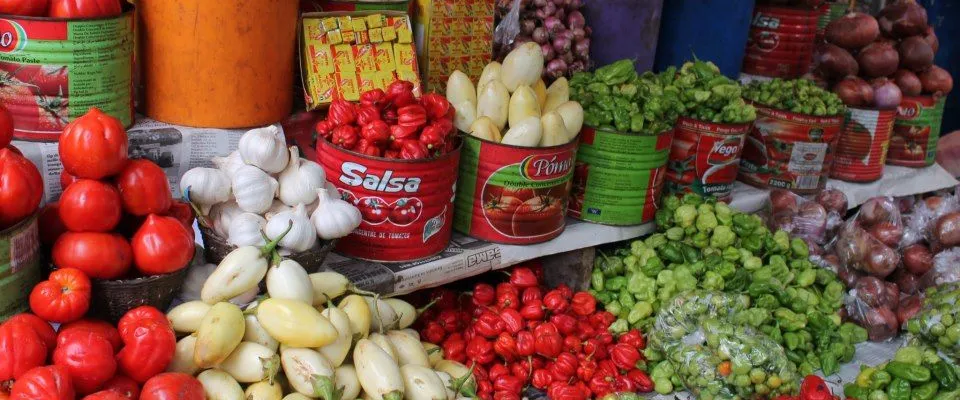
The drop to 3.8% is largely attributed to a massive slump in food price inflation and a stabilized utility tariff regime. Government spokespeople have hailed the “Mahama Economic Recovery Plan” for restoring macro-stability. Yet, for the average business owner at Makola Market or Abossey Okai, the numbers on paper don’t match the pockets.
The Ghana Cedi is currently facing renewed pressure, trading at GH₵11.90 to the US Dollar at licensed forex bureaus as of February 10. Businesses complain that while inflation (the rate of price increase) is slowing, the actual cost of importing raw materials remains prohibitively high due to the currency’s 12% depreciation since the start of the year.
The Cocoa Crisis: A GH₵10 Billion Hole
The most pressing issue for the Cabinet today is the standoff between COCOBOD and international cocoa buyers. Following the government’s decision to hike producer prices to support farmers, global chocolate manufacturers have hesitated to sign off on the traditional syndicated loan model.
Currently, an estimated 50,000 tonnes of cocoa remain stuck in warehouses because buyers are refusing to pay the “living income differential” premium in a falling global market. This has left a GH₵10 billion liquidity gap, leaving thousands of farmers in the Western and Ashanti regions without payment for their harvests. The Cabinet is expected to discuss a “domestic syndication” plan to prevent a total collapse of the 2025/2026 cocoa season.