Mexico is currently facing one of its most volatile security moments in recent years following the death of Nemesio Rubén Oseguera Cervantes, widely known as “El Mencho,” the powerful leader of the Jalisco New Generation Cartel (CJNG). His killing during a military operation has triggered nationwide tensions, retaliatory violence, and fears of a new phase in the country’s long-running battle against organized crime.
The situation remains fluid, with military deployments, school closures, and security alerts affecting multiple states. Authorities warn that the aftermath of his death could reshape the balance of power among criminal organizations and potentially lead to an extended period of instability.
The Operation That Changed Everything
Mexican military forces launched a targeted operation in the western state of Jalisco to capture the elusive cartel leader. The operation ended with Oseguera’s death after he was injured during a firefight and later died while being transported for treatment.
El Mencho had long been one of the most wanted drug traffickers in the world, accused of overseeing a vast criminal network responsible for trafficking fentanyl, methamphetamine, and cocaine internationally.
His cartel, CJNG, had grown into one of the most powerful and violent criminal organizations in Mexico, challenging both rival gangs and government forces.
The operation marked a major victory for the Mexican government in its fight against organized crime. However, the immediate aftermath showed that eliminating a powerful cartel leader does not necessarily mean immediate stability.
Retaliation and Nationwide Violence
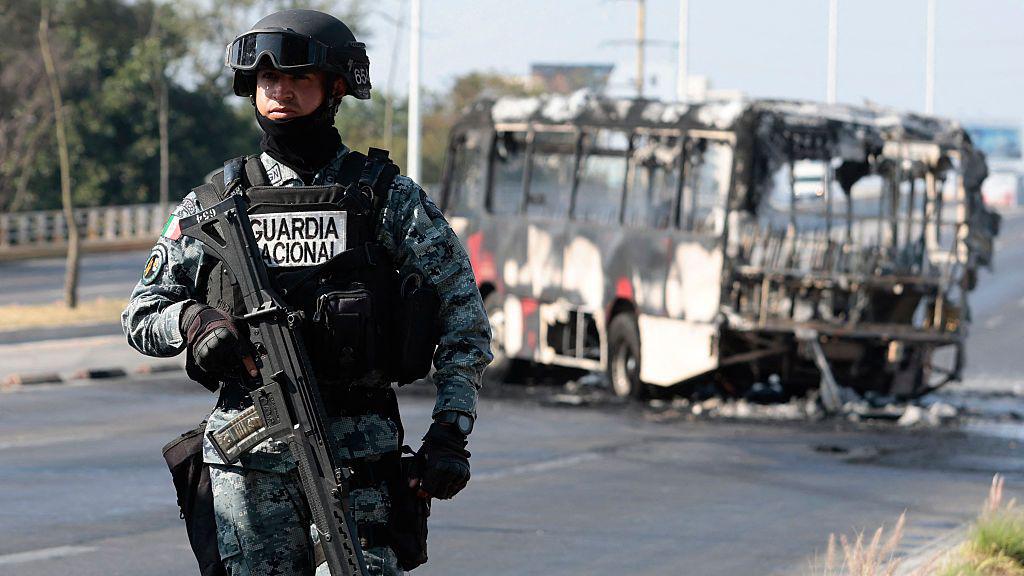
Within hours of the news spreading, violence erupted across multiple regions. Criminal groups launched retaliatory attacks, burning vehicles, blocking roads, and engaging in armed clashes with security forces.
The unrest spread beyond Jalisco to several states, including Guanajuato, Michoacán, Nayarit, and Tamaulipas. Shootouts, explosions, and widespread disruption were reported as cartel members responded to the loss of their leader.
Authorities estimate that dozens of people have been killed in the operation and its aftermath, including security personnel and suspected cartel members.
In some cities, businesses shut down and residents were advised to remain indoors as chaos unfolded.
Schools in multiple regions were temporarily closed, and security cabinets were convened across states to coordinate responses to the escalating crisis.
Massive Military Response
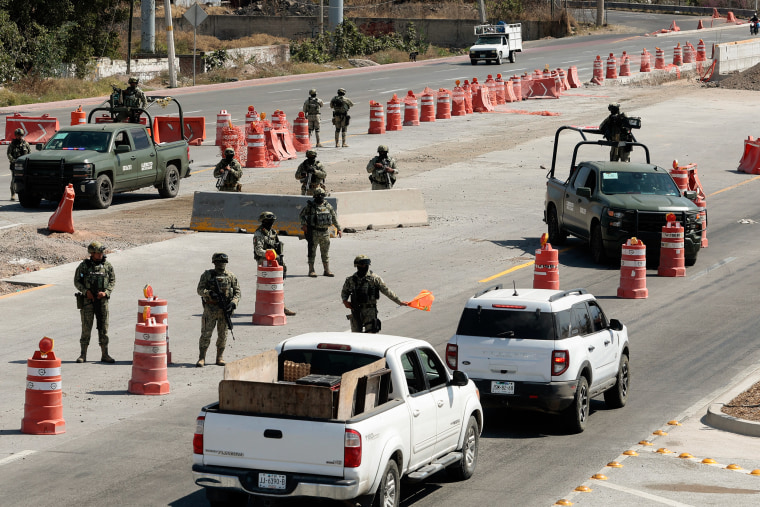
In response to the surge in violence, the Mexican government deployed thousands of troops to stabilize affected areas, particularly in Jalisco, where the cartel’s influence is strongest.
The deployment aims to prevent further retaliation, secure key infrastructure, and restore order. Authorities fear that CJNG factions or rival groups could attempt to take advantage of the power vacuum.
Security experts warn that such situations often lead to internal cartel conflicts, which can increase violence before stability returns.
Who Was “El Mencho”?
Nemesio Oseguera Cervantes rose from a modest background to become one of the most feared figures in global organized crime. He led the CJNG from its founding in 2009 and expanded its operations across Mexico and internationally.
Under his leadership, the cartel became known for:
- Highly coordinated attacks against government forces
- Advanced weaponry and military-style tactics
- Aggressive expansion into new territories
- Global drug trafficking operations
The United States had offered a multimillion-dollar reward for information leading to his arrest, highlighting his international notoriety.
Power Vacuum and Leadership Struggle
One of the biggest concerns following El Mencho’s death is the leadership vacuum within the CJNG.
With his son imprisoned in the United States and no clear successor, analysts believe the cartel may enter a period of internal power struggles.
Several top commanders are expected to compete for control, a process that could spark new conflicts within the organization and increase violence across regions where the cartel operates.
Historically, the removal of cartel leaders in Mexico has often resulted in fragmentation rather than collapse, with splinter groups emerging and fighting for territory.
Fear Among Citizens
For ordinary Mexicans, the current crisis has generated widespread fear and uncertainty.
Residents in affected areas have reported hearing gunfire, explosions, and helicopters as security forces clash with armed groups. Some cities have experienced temporary shutdowns, and daily life has been disrupted by safety concerns.
Communities already accustomed to cartel violence are bracing for a possible escalation as rival factions reposition themselves.
International Implications
The situation has drawn international attention, particularly from the United States, where CJNG has been identified as a major supplier of illicit drugs.
Security analysts warn that instability in Mexico could affect cross-border security, migration patterns, and drug trafficking routes.
Global governments have also issued safety advisories, urging their citizens to remain cautious in affected regions.
A Turning Point in Mexico’s Drug War?
The death of El Mencho is being viewed by some as a turning point in Mexico’s decades-long struggle against organized crime.
For years, CJNG had grown in power, challenging both the government and rival cartels. Eliminating its leader represents a significant strategic victory.
However, experts caution that history shows similar operations often produce short-term victories followed by long-term instability.
In many cases, violence increases as groups compete for control of territories and resources.
The Larger Context: Mexico’s Ongoing Security Challenge
Mexico’s battle against cartels is not new. Organized crime has shaped the country’s security landscape for decades, influencing politics, economies, and social stability.
Drug cartels have become deeply entrenched, with networks extending across regions and even continents.
Efforts to dismantle them require not only military operations but also economic, social, and institutional reforms.
Economic and Social Impact
Beyond violence, the current crisis could have broader consequences:
- Tourism disruptions
- Business closures in affected regions
- Strain on public services
- Increased displacement of families
Communities in areas heavily impacted by cartel violence often face long-term economic hardship and reduced investment.
What Happens Next?
The immediate future remains uncertain. Several scenarios are possible:
1. Cartel Fragmentation
The CJNG could split into factions competing for leadership.
2. Rise of a New Leader
A senior commander may consolidate control and continue operations.
3. Escalation of Violence
Rival cartels could exploit the situation to expand territory.
4. Stronger Government Control
If security operations remain effective, authorities could weaken cartel influence.
The Human Cost
Behind the headlines are real human stories—families displaced, businesses destroyed, and communities living in fear.
Violence tied to organized crime continues to take a toll on civilians, security forces, and local economies.
The death of a cartel leader may be a major event, but the broader challenge remains protecting ordinary citizens from its consequences.
Conclusion
Mexico stands at a critical moment following the death of one of its most powerful cartel leaders.
While the operation represents a major success for the government, the resulting violence highlights the complexity of dismantling criminal networks deeply embedded in society.
The coming weeks and months will determine whether this event marks a turning point toward greater security—or triggers another cycle of instability in Mexico’s long fight against organized crime.
For now, the country remains on high alert, balancing between victory and uncertainty.