Muslims across the world are preparing for Ramadan 1447 AH, the holiest month in Islam marked by fasting, prayer, charity, and spiritual reflection. In the United Arab Emirates, as in many Muslim-majority countries, the official start of Ramadan depends on the sighting of the crescent moon (hilal), making moon-sighting announcements closely watched both locally and internationally.
How Ramadan Dates Are Determined
The Islamic calendar follows a lunar system, meaning months begin with the sighting of the new crescent moon. Ramadan begins after the moon is sighted on the 29th night of Sha’ban.
- If the crescent moon is seen after sunset, Ramadan begins the next day.
- If the moon is not sighted, Sha’ban completes 30 days and Ramadan starts one day later.
This method can cause Ramadan to begin on different days in different countries, depending on local sightings and religious authority decisions.
Crescent Moon Sighting in the UAE for Ramadan 2026
In the UAE, the official confirmation of Ramadan is made by the Moon Sighting Committee, which meets after sunset on the 29th of Sha’ban. The committee relies on:
- Visual moon sightings
- Testimonies from trusted observers
- Astronomical data to support observations
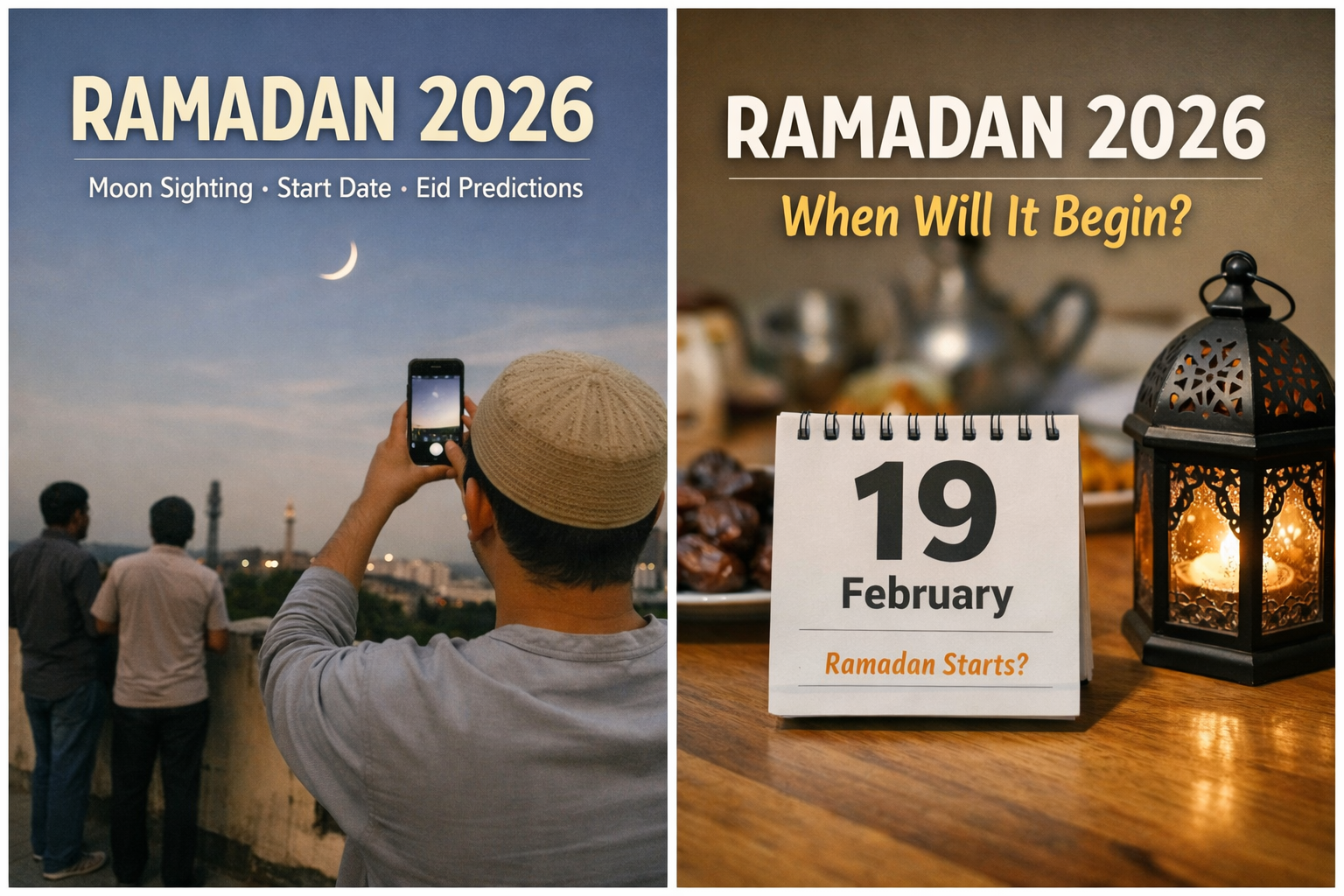
For Ramadan 2026, moon-sighting efforts were expected to take place on the evening of Tuesday, February 17, 2026.
Astronomical experts had indicated that the crescent moon would be difficult or impossible to see in much of the region that evening due to the moon setting close to or before sunset. This made a later start more likely.
Expected Start Date of Ramadan 2026 in the UAE
Based on astronomical predictions and regional visibility:
- If the crescent moon were sighted on February 17, Ramadan would begin on Wednesday, February 18, 2026.
- If the crescent moon were not sighted, Ramadan would most likely begin on Thursday, February 19, 2026.
The UAE traditionally announces the final decision through official channels shortly after the moon-sighting committee concludes its meeting.
Crescent Moon Sightings and Announcements Worldwide
Around the world, countries follow different moon-sighting methods:
- Some nations rely strictly on local visual sightings
- Others use astronomical calculations
- Some accept moon sightings from other countries
As a result, Ramadan 2026 was expected to begin on different days globally:
- Several Middle Eastern and Asian countries leaned toward February 19, 2026
- Some regions using calculated calendars may have started a day earlier
These differences reflect long-standing religious traditions and interpretations within the global Muslim community.
The Significance of Ramadan
Ramadan is more than abstaining from food and drink from dawn to sunset. It is a time dedicated to:
- Increased prayer and Qur’an recitation
- Acts of charity and generosity
- Self-discipline and moral reflection
- Community gatherings for iftar and nightly prayers (Taraweeh)
For Muslims, Ramadan represents spiritual renewal and a chance to strengthen faith and community bonds.
When Will Ramadan 2026 End?
The end of Ramadan is determined by the sighting of the Shawwal crescent moon, which marks Eid al-Fitr.
- If Ramadan lasts 29 days, Eid al-Fitr would likely fall around March 20, 2026
- If Ramadan lasts 30 days, Eid may be observed around March 21, 2026
As with the start of Ramadan, the final date depends on moon-sighting confirmation.
Summary: Ramadan 2026 at a Glance
- Moon sighting attempt: February 17, 2026
- Expected start in UAE: February 18 or 19, 2026
- Expected end: March 18 or 19, 2026
- Eid al-Fitr: March 20 or 21, 2026
As Ramadan 2026 approaches, anticipation continues to build across the UAE and the wider Muslim world. While astronomical calculations offer strong predictions, the official start of Ramadan ultimately rests on crescent moon sighting announcements, preserving a tradition that has guided Islamic worship for centuries.